

Add Row
Add Element
cropper
update
AI Ranking by AIWebForce.com
cropper
update
Add Element
  • Home
  • Categories
    • Marketing Evolution
    • Future-Ready Business
    • Tech Horizons
    • Growth Mindset
    • 2025 Playbook
    • Wellness Amplified
    • Companies to Watch
    • Getting Started With AI Content Marketing
    • Leading Edge AI
    • Roofing Contractors
    • Making a Difference
    • Chiropractor
    • AIWebForce RSS
  • AI Training & Services
    • Three Strategies for Using AI
    • Get Your Site Featured
May 28.2025
3 Minutes Read

Toyota's 440,000 Vehicle Recall: What You Need to Know About Rearview Lighting Defects

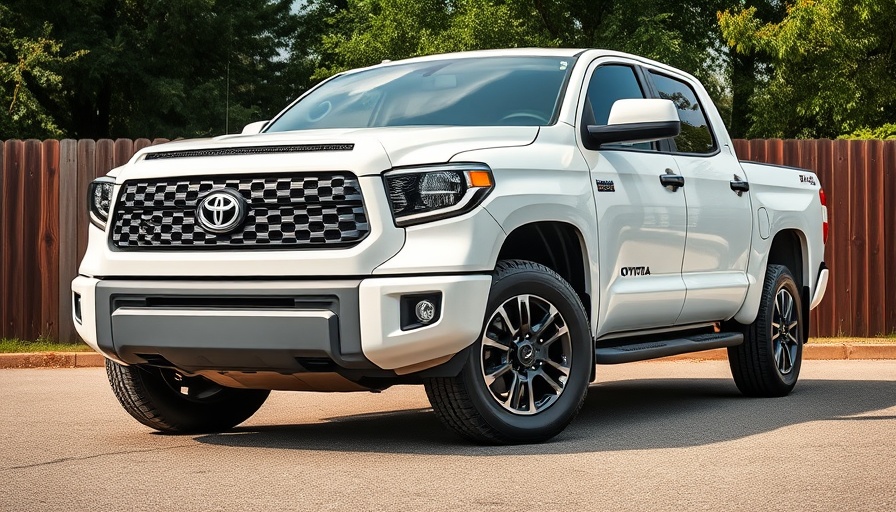
Toyota truck with a robust design, related to reverse lighting defect recall.

Toyota's Urgent Recall: A Critical Safety Concern

Over 440,000 Toyota vehicles are being recalled due to serious rearview lighting defects that could jeopardize driver and pedestrian safety. This alert affects models ranging from the 2022 to the 2025 Tundra and Tundra Hybrid series. The National Highway Traffic Safety Administration (NHTSA) has reported that the reverse light systems are at risk for moisture intrusion, leading to potential failures. As these lights indicate when a vehicle is reversing, the absence of functioning lights poses a significant visibility problem, especially in busy urban environments or poorly lit areas.

Why This Matters to Drivers

The implications of this recall are far-reaching. Not only does a malfunctioning lighting system hinder a driver’s ability to reverse safely, but it also places pedestrians and nearby vehicles at risk, significantly increasing the likelihood of accidents. More than just an inconvenience, impaired reverse lights can transform a simple parking maneuver into a dangerous endeavor. Camouflaged hazards are unacceptable when it comes to vehicle safety, particularly with a significant volume of affected models.

Models Affected: Are You Driving One?

The recall specifically targets various iterations of the Tundra model—both standard and hybrid—from 2022 through 2025, impacting a wide range of consumers. Owners can expect to receive notification letters from Toyota by late June 2025. Until the official notice arrives, those driving affected models should be extra cautious when backing up, diligently avoiding tight spots or crowded areas when possible.

How Toyota is Addressing the Issue

In response to this critical safety flaw, Toyota has pledged to resolve the issue at no charge to owners. Their solution involves replacing both defective reverse light assemblies and adjusting wire harnesses as required. While these repairs won’t cost consumers, the immediate focus should be on minimizing the potential for accidents through heightened awareness and attentiveness while driving.

Considerations Beyond the Recall

This recall shines a spotlight on broader issues regarding vehicle safety and manufacturer responsibility. It serves as a reminder for car owners to remain vigilant about vehicle notifications and recalls. With recalls becoming more frequent in today’s automotive landscape, understanding how to navigate this process is essential for all drivers. Owners should keep an active eye on communications from manufacturers and regulatory agencies, ensuring that they remain informed of any safety developments that may affect them.

Empower Yourself as a Vehicle Owner

Activate your awareness by checking the official NHTSA recall page regularly. Keeping abreast of active recalls helps guarantee your safety—and that of others—on the road. Additionally, if you have questions regarding the recall that affects your vehicle, don’t hesitate to reach out to Toyota’s customer service at 1-800-331-4331 for detailed assistance. You can also inquire directly with the NHTSA at their hotline at 1-888-327-4236 if you encounter difficulties.

Taking these proactive steps not only enhances your awareness but also empowers you to demand the highest safety standards from automakers. A little diligence goes a long way in fostering a culture of safety on the roads.

Home Now and Future

0 Comments

Write A Comment

*
*
Related Posts All Posts
02.18.2026

Spam Calls Decoded: Smart Strategies to Silence Them Now

Update Understanding the Rise of Spam CallsIn today's digital age, spam calls have become an almost inescapable nuisance for anyone with a phone number. Recent developments in AI technology have enhanced the sophistication of these unsolicited calls, making them increasingly difficult to detect. As cybersecurity experts Shlomi Beer highlights, "Fraud has become cheaper, more scalable, and far more convincing than ever." This ominous landscape compels us to explore the reasons behind the surge in spam calls, especially during a time when personal data is often compromised.The Danger of Engaging with ScammersThere’s a crucial insight in avoiding any engagement with spam callers: do not respond. Even small confirmations, like correcting a caller's misinformation, can provide them with valuable details to target you later. Experts recommend a simple yet effective strategy: hang up immediately. The use of “spoofed” numbers—caller IDs that have been falsely masked—means blocking a number might not stop further calls. Cybersecurity professionals like John Lemay urge users to let these dubious calls go unanswered.Built-In Tools to Combat SpamThe good news is that both iOS and Android devices have built-in features designed to help you manage unwanted calls. iPhone users can silence calls from numbers not saved in their contacts, while Android users can enable a spam call blocking feature through the Smart Call option. These tools, when properly configured, can significantly reduce the number of spam calls you receive.Third-Party Applications: Are They Worth It?While many experts believe built-in tools are sufficient, third-party applications like Truecaller or Hiya can offer additional protection by maintaining databases of known spam numbers. However, it’s essential to weigh their benefits against the privacy implications and potential costs. Using a combination of built-in tools and these apps can provide a more comprehensive approach to combating spam calls.ConclusionAs spam calls continue to invade our daily lives, it is crucial to arm ourselves with knowledge and tools that can enhance our personal security. Staying informed, utilizing your device’s features, and being cautious of third-party solutions can significantly improve your defenses against these persistent nuisances. Don't let spam calls dominate your phone—take charge today!

02.18.2026

Hyundai Issues Recall for Nearly 600,000 Vehicles Over Airbag Safety Issues

Update Hyundai Recalls Nearly 600,000 Vehicles: Understanding the Airbag IssueIn a significant move, Hyundai has announced a massive recall affecting nearly 600,000 vehicles due to a safety-related airbag malfunction. As per updates from the National Highway Traffic Safety Administration (NHTSA), this recall predominantly impacts the 2020-2025 Hyundai Palisade models, with potential safety risks associated with side-curtain airbag deployment for third-row occupants during crashes.The Importance of Functional AirbagsAirbags are a crucial safety feature in vehicles, designed to protect passengers during collisions. However, malfunctioning airbags significantly increase the risk of severe injury or death in the event of an accident. In this case, the NHTSA has noted that improper deployment of the side-curtain airbags could expose passengers to heightened dangers, notably in scenarios such as rollover accidents. Affected vehicles do not meet federal safety standards established under FMVSS number 226, which emphasizes proper ejection mitigation.Which Models Are Affected?The primary vehicle affected by this recall is the Hyundai Palisade, encompassing models from 2020 through 2025. This includes:2020 Palisade2021 Palisade2022 Palisade2023 Palisade2024 Palisade2025 PalisadeAdditionally, other models such as the Tucson and Santa Cruz have also been noted in association with various recalls linked to airbag and electrical issues. Owners of these vehicles are encouraged to monitor their mail for official notifications expected to arrive in late March 2026.What Steps Is Hyundai Taking?Hyundai acknowledges the issue and is currently working towards a remedy. They have indicated that a fix is still under development and that vehicle owners will be informed via mail when the solution becomes available. Until then, customers are advised to minimize the use of affected vehicles, especially the third-row seating, to mitigate safety risks. Alternative transportation options, such as ridesharing or public transit, may be advisable during this period.Staying Informed: Safety FirstIt’s crucial for Hyundai owners to stay informed about the status of recalls involving their vehicles. Many authoritative sources, including the NHTSA's recall database, allow owners to input their Vehicle Identification Number (VIN) to check for any open recalls. Given the potential risks involved, checking this information regularly can lead to timely interventions that ensure passenger safety.What to Do If Your Vehicle Is AffectedIf you own one of the impacted Hyundai models, it’s essential to take proactive measures. Reach out to Hyundai's customer service at 1-855-371-9460 using recall number 292 for more information. It’s recommended that owners keep track of any communications from the company regarding inspections and repairs, which will be performed at no cost.Conclusion: Prioritize Your SafetySafety should always be a priority, especially in light of recent developments. With a substantial number of vehicles recalled due to crucial safety issues, staying engaged and informed can make all the difference. Hyundai owners should make it a practice to regularly check for any updates regarding recalls and ensure their vehicles are up to federal safety standards, safeguarding both themselves and their passengers. Keep your commute safe and consider alternative transportation options as needed.

02.17.2026

Discovering the Benefits of Sleeping with a Weighted Blanket

Update The Science Behind Weighted BlanketsFor those struggling with sleepless nights, the search for solutions often leads to various remedies from meditation apps to herbal teas. But an increasingly popular option takes a more tactile approach: weighted blankets. These thick blankets, filled with materials like glass beads or plastic pellets, can weigh anywhere from 3 to over 20 pounds and are designed to offer deep pressure stimulation, which mimics the soothing sensation of a hug.Several studies, although limited in scope, suggest that these blankets may help reduce anxiety and improve sleep quality. For instance, a systematic review published in the American Journal of Occupational Therapy revealed the potential for weighted blankets to aid those with anxiety, but it cautioned that more comprehensive research is necessary to establish their efficacy fully.Current Research on Sleep Quality and AnxietyA recent pilot study published in BCM Psychiatry indicated positive outcomes for sleep quality among adults with insomnia who used weighted blankets. Participants reported not only a reduction in anxiety symptoms but also a noticeable improvement in their overall sleep satisfaction. Despite the promising results, experts agree that further long-term studies involving larger sample sizes are essential.Who Can Benefit from Weighted Blankets?People with various conditions, including anxiety disorders, autism spectrum disorders, and chronic pain, may find particular relief using weighted blankets. The concept of deep pressure stimulation is not new in therapeutic settings; it has been employed to help calm children with sensory processing issues and adults in psychiatric care.Dr. Mahesh Bhaskaran, a sleep specialist at the Sleep Institute, often recommends these blankets as a non-invasive option for patients suffering from insomnia and restlessness. "For some people, the consistent pressure from the blanket can create a sense of security, reducing the physiological symptoms of anxiety that keep them awake at night," he explains.Using Weighted Blankets SafelyIndividuals interested in trying a weighted blanket should choose one that weighs about 10% of their body weight, a guideline supported by many manufacturers. However, it's crucial to consult a physician before using a weighted blanket, especially for individuals with specific medical conditions like sleep apnea, respiratory issues, or circulatory concerns.Alternatives and Conclusion: Exploring Your OptionsWhile weighted blankets appear to offer a novel approach to improving sleep and alleviating anxiety, it’s essential to approach their use with realistic expectations. Techniques such as Cognitive Behavioral Therapy (CBT) remain the gold standard for managing chronic insomnia, and combining these strategies with the use of weighted blankets could yield the best results.If you’re curious about the benefits of weighted blankets and think they may help you, it could be worth a try. Worst-case scenario, you discover they are not for you, and you can always find someone else who might benefit from the extra coziness.Overall, weighted blankets may not be a miracle cure for insomnia, but they represent an intriguing blend of comfort and therapeutic intention that many might find worthwhile. As always, engage in strategies that combine knowledge and self-awareness, as each individual’s needs are unique. Happy sleeping!

Terms of Service

Privacy Policy

Core Modal Title

Sorry, no results found

You Might Find These Articles Interesting

T
Please Check Your Email
We Will Be Following Up Shortly
*
*
*