

Add Row
Add Element
cropper
update
AI Ranking by AIWebForce.com
cropper
update
Add Element
  • Home
  • Categories
    • Marketing Evolution
    • Future-Ready Business
    • Tech Horizons
    • Growth Mindset
    • 2025 Playbook
    • Wellness Amplified
    • Companies to Watch
    • Getting Started With AI Content Marketing
    • Leading Edge AI
    • Roofing Contractors
    • Making a Difference
    • Chiropractor
    • AIWebForce RSS
  • AI Training & Services
    • Three Strategies for Using AI
    • Get Your Site Featured
March 19.2025
2 Minutes Read

Pangea's 3D-Printed Aerospike Rocket Engines: The Future of Space Exploration

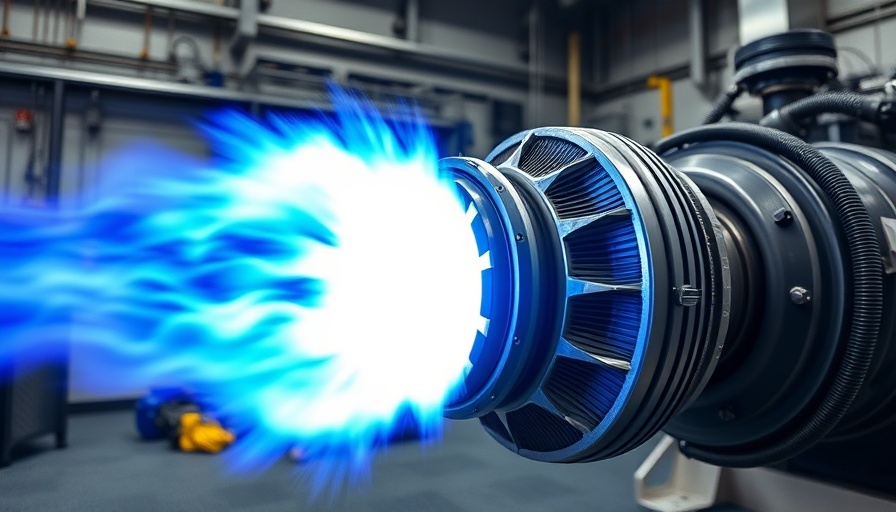
3D-printed aerospike rocket engine testing in high-tech facility.

Revolutionizing Rocket Technology with Aerospike Engines

The space industry is witnessing a transformation with the rise of startups like Pangea Aerospace, which aims to become a key player in rocket propulsion systems. Backed by investment from former ArianeGroup CEO André-Hubert Roussel, Pangea is working on developing 3D-printed aerospike rocket engines that promise improved efficiency and reusability in space travel.

What Makes Aerospike Engines Unique?

Aerospike engines, initially conceptualized in the 1960s, have long been recognized for their spiked-nozzle design. This design allows for better altitude performance and fuel efficiency compared to traditional bell-shaped engines. However, due to complexities in manufacturing and a decline in space programs, they remained largely underutilized. Today, Pangea is leveraging advancements in cooling techniques and materials science to make the production of aerospike engines feasible.

Pangea's Innovative Approach to Engine Design

Founded in 2018, Pangea has quietly progressed in developing technologies to support their mission. The company recently secured €23 million in Series A funding, with plans to produce the ARCOS engine - branded as the world’s first flight-ready aerospike engine. This engine will be 3D-printed and designed for a lifespan of up to 10 missions, making it a significant advancement towards more sustainable space exploration.

Partnerships and Future Prospects

Pangea is forging partnerships with various private space companies to test its new propulsion systems. Their collaboration with Aenium Engineering has led to the development of a proprietary copper-alloy material that optimizes the durability and efficiency of their engines. With projections estimating the space economy to reach $1.8 trillion by 2035, companies like Pangea are positioning themselves to capture a significant market share.

The Strategic Importance of Space Technology for Europe

Beyond commercial prospects, Pangea's advancements hold strategic implications for Europe's autonomy and defense capabilities. As tensions rise globally, having a strong local space economy is essential for maintaining independence in critical technology sectors. Pangea’s commitment to becoming a leader in propulsion systems could pave the way for Europe’s strengthened presence in the cited booming space market.

With innovative startups like Pangea leading the charge, the future of rocket propulsion is poised for a dramatic shift towards more efficient and economically viable technologies. As they embark on this exciting journey, the support from industry veterans only adds to the credibility and potential impact of their endeavors.

Marketing Evolution

0 Comments

Write A Comment

*
*
Please complete the captcha to submit your comment.
Related Posts All Posts
04.17.2026

Envision AESC’s $2 Billion Hong Kong IPO: A Strategic Departure from the U.S.

Update Envision AESC's Strategic Shift: Hong Kong IPO on the Horizon The electric vehicle (EV) battery market is buzzing with news that Envision AESC, a notable player in the sector, is contemplating a $2 billion initial public offering (IPO) in Hong Kong. This decision marks a significant pivot from its earlier plans to list on U.S. exchanges. Controlled by China's Envision Group and backed by Singapore's sovereign wealth fund GIC, the company has emerged as a crucial supplier of lithium-ion batteries, essential for powering the next generation of EVs. Why the Change? A Response to Market Conditions Envision AESC's potential move to Hong Kong comes amid a rebounding IPO landscape in the region, which recently claimed the title as the top global market for IPOs. In 2025 alone, Hong Kong raised HK$285.8 billion across 119 listings, with a record-breaking HK$110 billion in just the first quarter of 2026. This resurgence could create an appealing environment for AESC’s IPO, providing the necessary funds to bolster its operations and meet increasing demand for EV batteries. Factors Influencing the Decision: A Complex Corporate Structure The company has a layered ownership structure with roots tracing back to a joint venture between Nissan and NEC in 2007. Following major investments from GIC and others, Envision Group's acquisition of AESC in 2018 consolidated its position in the clean energy market. This history has forged a strong manufacturing footprint that not only spans Japan and the U.S. but also makes a significant impact in Europe, particularly at its Sunderland plant, recognized as one of the UK's largest battery facilities. Challenges Ahead: Geopolitical Considerations While the shift towards a Hong Kong IPO seems strategically sound, it is not without complications. Reports indicate that AESC's Chinese ownership could complicate its ability to access U.S. markets under the Inflation Reduction Act, which imposes restrictions on companies with ties to the Chinese government, potentially excluding them from crucial tax credits. This stark reality has influenced the decision to explore opportunities in Hong Kong instead. Anticipating Future Trends: Implications for the EV Market The globalization of battery manufacturing is essential as the world pivots towards renewable energy solutions. AESC’s expected listing could not only provide significant capital for expansion but also signal a shift in how companies navigate international markets amid evolving political landscapes. This could influence investor sentiments globally and offer a precedent for other tech and manufacturing firms wrestling with similar dilemmas. Conclusion: A Watchful Eye on the Future As Envision AESC weighs its IPO options, industry watchers are keen to see how the Hong Kong market continues to thrive as a hub for tech and energy investments. The company's decision illustrates a broader trend where the need for capital must be balanced against geopolitical realities in an increasingly interconnected world.

04.17.2026

Sequoia's $7 Billion Fund: A Bold Bet on the Future of AI Investment

Update The Significance of Sequoia's $7 Billion FundIn a bold move for the future of investment, Sequoia Capital has raised approximately $7 billion, marking its largest fund to date focused on late-stage ventures. This substantial sum nearly doubles the $3.4 billion raised in 2022 and highlights a transformative era propelled by artificial intelligence (AI). With new co-stewards Alfred Lin and Pat Grady at the helm, this fund represents not only a financial initiative but also a strategic pivot toward prioritizing AI technologies.AI's Transformative Influence on InvestmentThe sharp growth in this fund underscores a significant structural change in late-stage venture funding, particularly influenced by the pace at which leading AI firms are raising capital. Companies like OpenAI and Anthropic, which Sequoia has backed, are spearheading this race, leveraging vast amounts of resources to develop cutting-edge AI models that are reshaping industries. The momentum suggests a future where investment dynamics increasingly revolve around AI capabilities.A New Leadership EraFor Sequoia, this fund marks not just a financial achievement but also a critical transition in leadership. Lin and Grady took over following a period of internal challenges, including the resignation of COO Sumaiya Balbale amidst a controversy regarding the firm’s handling of sensitive issues. Their approach, reflective of Sequoia's founding principles, involves greater accountability and a commitment to addressing ethical responsibilities within the tech industry.Expanding Horizons: Global Focus on AIImportantly, this new fund is strategically focused on U.S. and European markets, following Sequoia's restructuring that now separates its global ventures from its previous Asian affiliates. This concentrated strategy highlights Sequoia's intent to deepen its ties in regions pivotal to AI development while navigating the complex landscape of global tech investment.

04.17.2026

Discover How GPT-Rosalind is Transforming Drug Discovery with AI

Update Opening New Frontiers in Life Sciences OpenAI's launch of GPT-Rosalind marks a revolutionary step in drug discovery and life sciences research, named after the pioneering scientist Rosalind Franklin. This purpose-built AI model aims to significantly speed up research timelines, potentially compressing the years it takes to develop new medications from 10-15 years down to a fraction of that time. A New Tool for Researchers GPT-Rosalind is engineered for tasks like hypothesis generation and experimental planning. It also integrates with over 50 scientific tools and databases, allowing researchers to seamlessly access a variety of biological data and computational resources. This interconnectedness is vital for the early stages of drug development, where rapid insights can lead to faster clinical outcomes. Streamlining Scientific Processes The model's capabilities extend to querying specialized databases, analyzing scientific literature, and suggesting experimental pathways—all within a single interface. This integrated workflow promises to enhance productivity for researchers at companies like Amgen and Moderna, who are among the first to adopt this powerful tool. Performance Benchmarks to Consider Initial performance metrics suggest that GPT-Rosalind is not just a theoretical model; it excels in practical applications. During testing, it achieved a pass rate of 0.751 on BixBench, outperforming previous versions on complex tasks such as cloning protocol design. Such metrics reflect its capacity to become a reliable partner in cutting-edge research. Important Ethical Considerations Despite the advantages, the launch of GPT-Rosalind does raise ethical questions. Researchers expressed concerns over the potential misuse of AI to engineer pathogens. OpenAI's restricted access model aims to mitigate these risks by vetting users before granting access to the model. This caution reflects a broader industry awareness regarding AI's dual-use potential. A Future for Research As AI continues to permeate the life sciences, tools like GPT-Rosalind promise to change how scientists conduct their work profoundly. OpenAI's initiative not only commemorates a significant figure in science but also serves as a testament to the transformative possibilities of AI in medicine.

Terms of Service

Privacy Policy

Core Modal Title

Sorry, no results found

You Might Find These Articles Interesting

T
Please Check Your Email
We Will Be Following Up Shortly
*
*
*