 Add Row
  Add
Add 


Unlocking the Universe's Secrets from the Moon
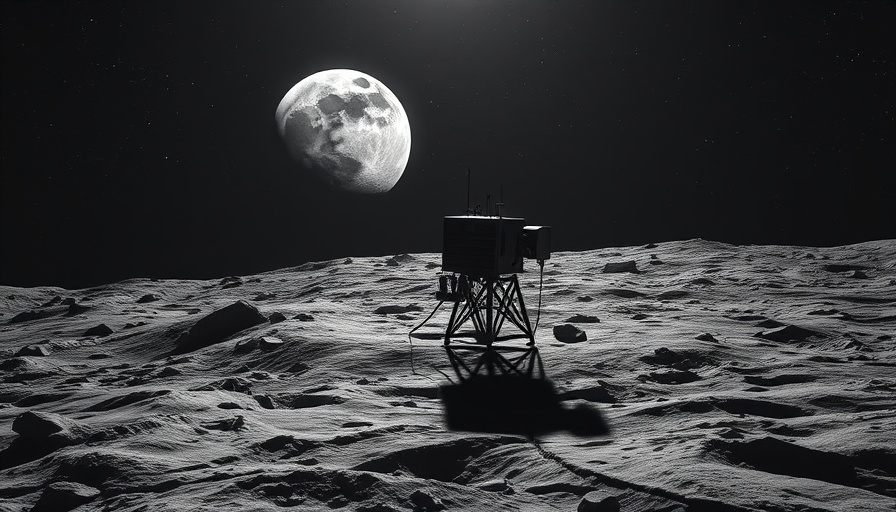
Imagine a radio station built not on Earth, but orbiting the Moon, tuned in to whispers of the cosmos from billions of years ago. This ambitious vision is being pursued by Blue Skies Space, a UK startup that has recently partnered with the Italian Space Agency to design a fleet of small satellites aimed at uncovering secrets from the early universe, specifically its fascinating 'dark ages.'
The Cosmic 'Dark Ages'
The term 'dark ages' refers to a time in the universe's history before stars ignited, when it was primarily a vast cloud of hydrogen gas. During this primordial era, hydrogen atoms naturally emitted radio waves at a frequency of 1420 MHz, known as the hydrogen line. Understanding these signals is crucial for astrophysicists, as they provide insights into the universe's formation and evolution. However, detecting these ancient radio waves from Earth presents significant challenges due to constant radio interference from our own activities.
The Far Side of the Moon as a Listening Post
Blue Skies Space's innovative approach includes positioning satellites on the far side of the Moon, where Earth's radio noise is minimized. This strategic location allows scientists to tune in to the ancient signals without the interference that makes detection difficult from our planet. By stretching the hydrogen line signal over 13 billion years of cosmic expansion, these signals could be 'redshifted' into the FM radio band, around 88-108 MHz, providing a clearer understanding of our universe's infancy.
Future Implications for Astronomy
This initiative has the potential to revolutionize our comprehension of the universe's earliest epochs. If successful, these small satellites could provide unprecedented data about conditions existing before the formation of the first stars and galaxies. This information could lead to breakthroughs in our understanding of cosmic evolution and the origins of matter.
Investing in Cosmic Research
The efforts by Blue Skies Space also highlight an emerging trend in investing in space-based technologies. As commercial opportunities in space exploration grow, collaborations between startups and national space agencies may become increasingly common. By paving the way for innovative solutions to scientific challenges, these partnerships can enhance our ability to explore and understand the universe.


Write A Comment